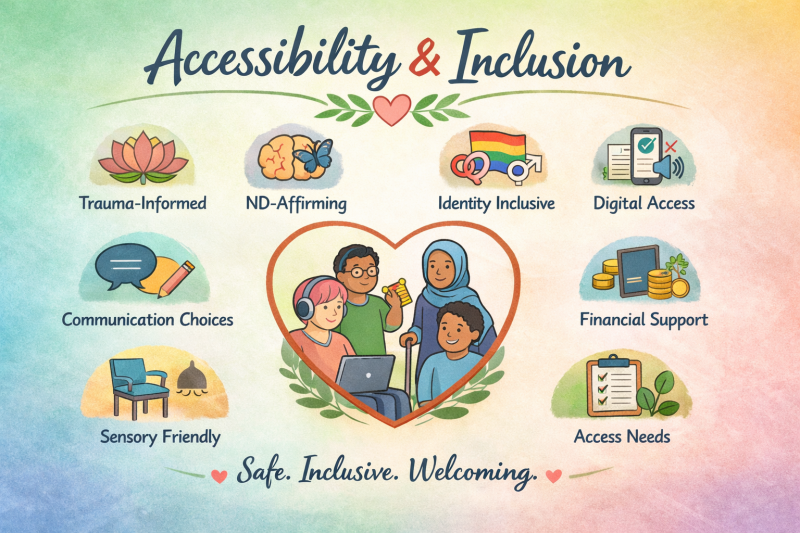
Accessibility & Inclusion
Our Commitment
Everyone deserves to access support, learning, and community spaces that feel safe, humane, and genuinely welcoming. My practice is built on trauma‑informed, feminist, and neurodivergent‑affirming values — which means accessibility isn’t an add‑on. It’s the foundation.
This page outlines how I design sessions, training, and resources so that people with diverse bodies, minds, identities, and lived experiences can participate fully.
Trauma‑Informed Accessibility
-
Gentle pacing with clear structure
-
Consent‑based participation (no forced sharing, no spotlighting)
-
Options for breaks, pausing, slowing down, or stopping
-
No “performance” expectations — you can show up exactly as you are
-
Emotional literacy woven throughout sessions
Neurodivergent‑ Affirming Practice
-
ND‑friendly communication (plain language, spacious explanations, no jargon)
-
Multiple ways to engage: visual, verbal, written, reflective
-
Predictable session flow and clear signposting
-
Sensory‑aware environments (lighting, noise, movement, comfort)
-
No pressure to mask, multitask, or “behave professionally”
Inclusive Communication
-
Choice of communication style: speaking, typing, writing, or using assistive tools
-
Visual aids, diagrams, and illustrated resources
-
Captioned videos and accessible PDFs
-
Clear headings, short paragraphs, and ND‑friendly formatting
-
Respect for processing time — silence is welcome
Physical & Sensory Accessibility
Whether online or in person, I aim to create spaces that feel comfortable and grounded.
-
Flexible seating and movement
-
Option to keep cameras off
-
Low‑stim environments where possible
-
Breaks built into longer sessions
-
You’re welcome to bring comfort items, fidgets, or sensory supports
Identity‑Inclusive Practice
My work is explicitly welcoming to people of all genders, sexualities, cultures, faiths, and lived experiences.
-
LGBTQIA+ affirming
-
Trans‑inclusive
-
Fat‑positive and anti‑diet culture
-
Anti‑racist and culturally responsive
-
No assumptions about identity, family, or background
Access Needs
You’re invited to share any access needs before or during our work together. Adjustments can be made at any time — no justification required.
Examples include:
-
pacing changes
-
sensory adjustments
-
communication preferences
-
breaks
-
alternative formats
-
support with executive functioning
You can include access needs in your booking form or email them directly.
Financial Accessibility
I offer:
-
sliding‑scale options for individuals
-
flexible payment plans for organisations
-
community‑rate sessions when available
If cost is a barrier, you’re welcome to reach out — we can explore options together.
Digital Accessibility
My website and digital resources are designed to be:
-
screen‑reader friendly
-
high‑contrast where needed
-
mobile‑accessible
-
captioned or transcribed
-
available in multiple formats (text‑first, visual‑first, and ND‑friendly layouts)
If you encounter any barriers, please let me know so I can improve them.
A Living Commitment
Accessibility and inclusion are ongoing practices. I regularly review and update my approaches based on feedback, learning, and evolving needs.
If something would help you feel safer, more grounded, or more included, you’re welcome to tell me — your experience matters.